The Paint Problems We See Most on Seattle Homes (And Why Most Start With Moisture)
The most common paint problems are mildew, peeling, blistering, chalking, cracking, fading, tannin bleed and surfactant leaching. In the Seattle area, most of them trace back to moisture: shaded walls that never dry, steam in bathrooms, or paint applied when cool, damp weather stopped it curing.
Some are cosmetic and wash off, like chalking and surfactant leaching. Peeling and blistering mean the paint has lost its bond, and repainting without fixing the cause usually brings the problem back.
This guide is organized by cause rather than symptom, because on the homes our exterior painting team works on, the cause decides the fix.

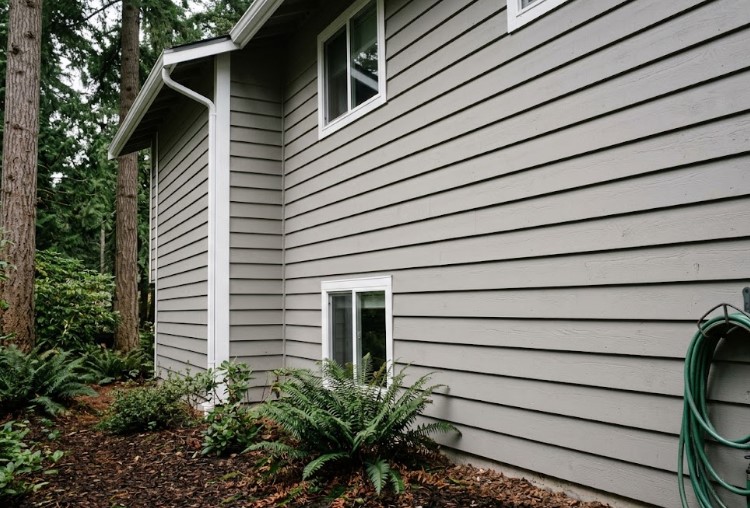
- A shaded siding wall after mildew treatment, drying and repainting. Photo: Happy Heart Painters
Common Paint Problems at a Glance
Match what you’re seeing to these tables of paint problems and solutions, then jump to the section for that cause.
Moisture and bonding problems
| Problem | Usual cause | Fix or repaint? |
|---|---|---|
| Mildew | Surface never dries | Clean, kill, dry |
| Peeling | Moisture or poor bond | Fix cause, prime, repaint |
| Blistering | Moisture or hot sun | Scrape, dry, prime, repaint |
| Surfactant leaching | Dew before curing | Wash with soapy water |
Sun, age and wood problems
| Problem | Usual cause | Fix or repaint? |
|---|---|---|
| Chalking | UV and age | Wash; repaint if heavy |
| Cracking, alligatoring | Brittle or thick layers | Strip, prime, repaint |
| Fading | UV, lower-grade paint | Repaint, UV-resistant |
| Tannin bleed | Cedar tannins and moisture | Stain-block primer |
Mildew only needs repainting if the paint under it is damaged. If your problem doesn’t match a row, send a photo and we’ll help identify it.
Exterior Paint Problems Caused by Moisture
Our crew finds mildew and peeling first on north facing walls, walls under trees or siding near sprinklers.
Mildew
Mildew is a fungus that grows on paint that stays damp. Shaded and north-facing walls can stay wet for days after Puget Sound rain.
Spots that lighten under a drop of diluted bleach are mildew (test 3 below). Paint over it without killing it, and it grows back through the new coat.
Peeling
Peeling is paint lifting away in strips or flakes. When large sections come off down to bare wood, moisture is usually getting behind the paint: overflowing gutters, failed caulk, sprinklers, or siding touching soil or mulch.
Flakes that separate between coats point to a poor bond instead.
Blistering
Blisters are bubbles under the paint film. Bare wood under the bubble points to moisture; paint under it points to heat, usually from painting in direct sun.
- Mildew streaks across the siding and peeling paint low on the wall beside the downspout
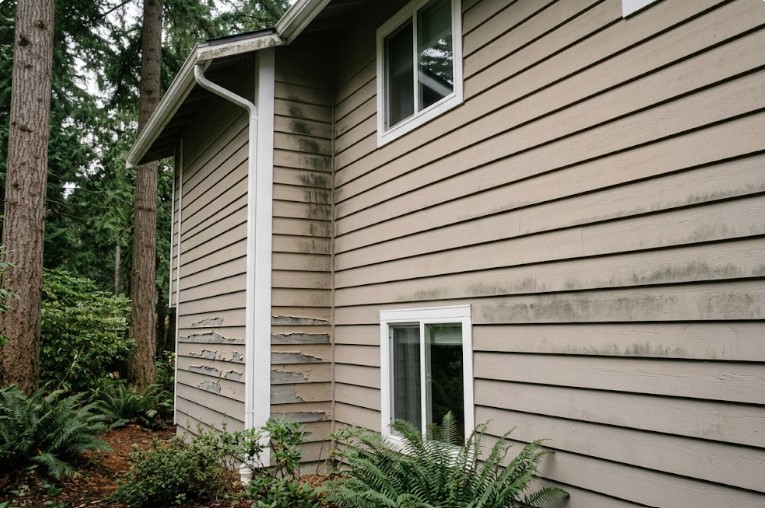
Soft or rotted wood under peeling paint needs carpentry before any primer goes on, which our restoration services handle.
Sun, Age and the Wood Itself
Tannin bleed on cedar
Tannin bleed is brown or orange staining that seeps through paint on cedar and redwood. Cedar is everywhere on Puget Sound homes, and moisture draws its natural tannins to the surface, where they stain light colours. A stain-blocking primer under the topcoat stops it.
Chalking and fading
Chalking is a white powder that rubs off on your hand as paint breaks down in UV light. Light chalking is normal ageing, but heavy chalking must be washed off before repainting or new paint won’t grip. Fading shows first on the sunniest sides.
Cracking and alligatoring
Fine cracks, or a scaly pattern like reptile skin, appear when layers turn brittle with age or went on too thick. The failing layers have to come off before new paint will hold, which is where older homes need extra care.
When the Trouble Starts on Painting Day
Surfactant leaching
Surfactant leaching shows up as sticky tan or brown drips days after painting, when dew or cool, damp air reaches the paint before it cures. It’s cosmetic and washes off with warm soapy water. It’s also why we schedule exterior work for the drier May to September window.
Poor adhesion
Paint that peels in sheets within a year or two often never bonded. The usual culprits are latex over oil-based paint without a bonding primer, or paint over glossy, dirty or chalky surfaces. If a recent paint job is failing this way, ask how the surface was tested and primed.
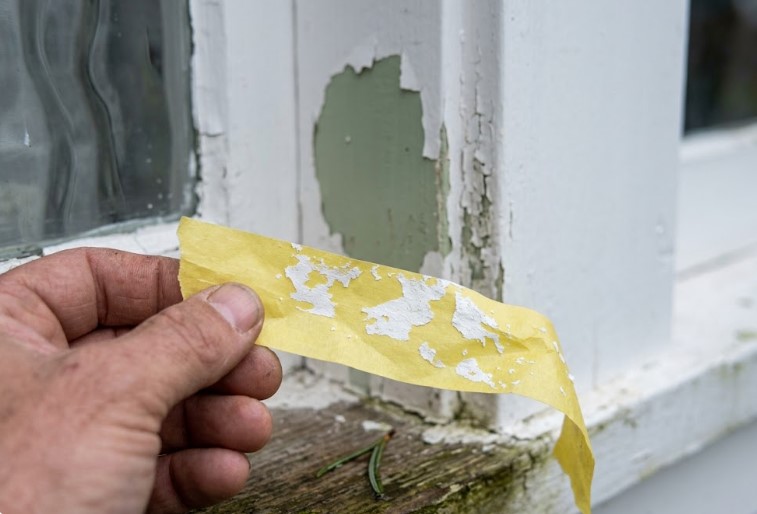
- Old white paint lifting off a window frame onto a strip of painter’s tape, with an earlier green coat showing underneath
Inside the House: Bathroom Peeling and Blistering
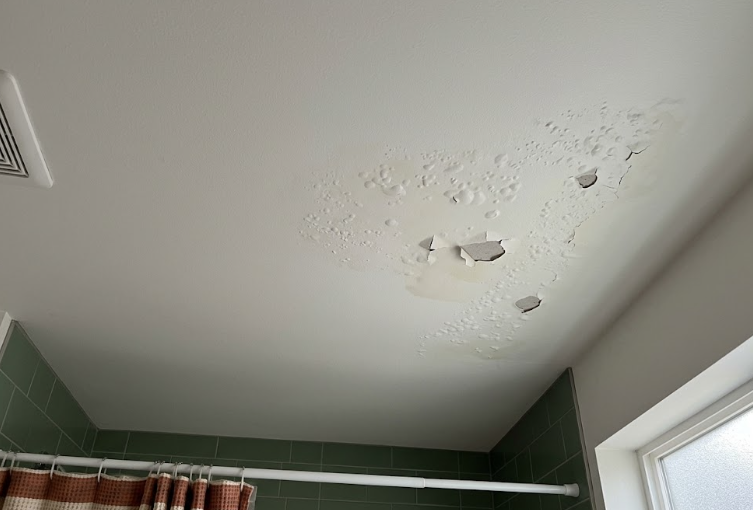
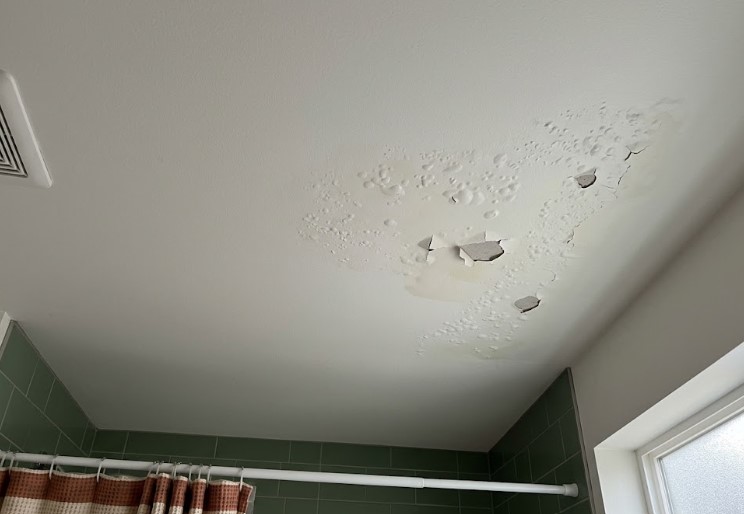
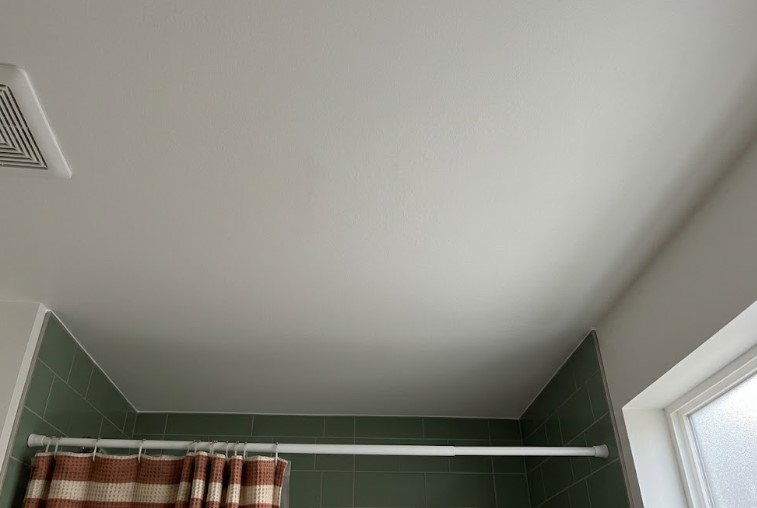
Bathroom paint fails when steam condenses on it faster than a weak or missing exhaust fan can clear it. Bathroom-rated paint helps, but ventilation is the real fix, and fan sizing or ducting is a job for an electrician or HVAC contractor. Yellow-brown staining can also mean water from above, so rule out a leak before blaming steam.
- A bathroom ceiling we repaired, with blistered, peeling paint and water staining before work began
- The same bathroom ceiling after the failed paint was removed and the ceiling repainted
Three Quick Tests to Diagnose Your Paint Problem
- Tape test (adhesion): press painter’s tape firmly on the paint and pull it off fast. Paint on the tape means a bond problem.
- Chalk rub test: rub a dark cloth on the surface. Heavy white residue means chalking; wash before any repaint.
- Bleach drop test (mildew or dirt): a drop of diluted household bleach lightens mildew within a minute or two, while dirt stays dark. Wear gloves, test a small spot and never mix bleach with other cleaners.
Repair or Repaint?
Spot repair works when the problem is local and its cause is fixed. Repaint the whole wall or side of the house when failure is widespread, when touch-ups won’t match, or when layers are cracking.
On our own work, the 7-year workmanship warranty and free lifetime touch-ups apply.
FAQs
What’s the most common paint problem on Seattle homes?
Moisture problems, mainly mildew and peeling.
Can you paint over mildew?
No. Clean it, kill it and let the surface dry first, or it grows back through the new paint.
Why is my new paint peeling already?
Usually poor surface prep, an incompatible earlier coat or moisture behind the paint.
Is peeling paint a sign of water damage?
It can be. Large sections peeling down to bare wood usually mean water is getting behind the paint, so find the source before repainting.
Do I need to repaint chalky paint?
Not always. Light chalking is normal ageing and washes off; heavy chalking needs washing before any repaint.
When should I fix peeling paint on the outside of my house?
Plan it over autumn and winter, then book the painting for the drier May to September window.
Get the Cause Found First
Most paint failures we see are fixable once the cause is found. Book a visit and we’ll come out within two days, look at the problem with you and give you a proposal on the spot.