Exterior Paint Durability: What Makes It Last (and How Long It Lasts in the PNW)
In Seattle, a good exterior repaint holds up seven to ten years, and a bad one starts letting go in three. The difference almost never comes down to which bucket you bought. Exterior paint durability is decided before the first coat goes on, in the washing, scraping, sanding, priming, and caulking.
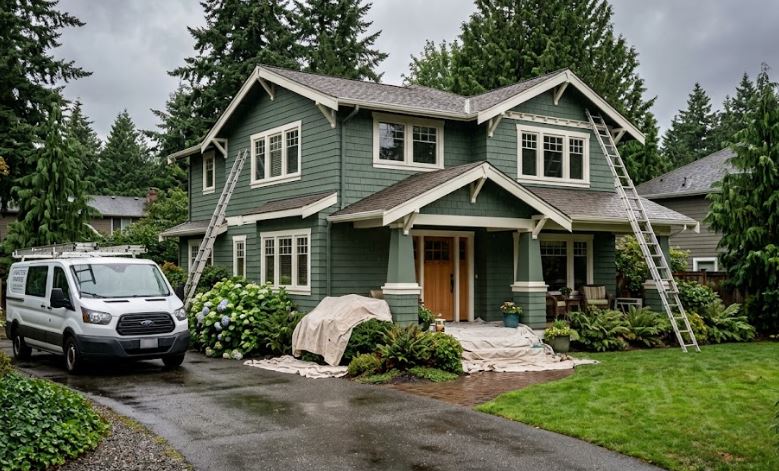
How long does exterior paint last?
Five to ten years on most homes, and in the Seattle area I’d narrow that to seven to ten with proper prep and quality paint, three to five without.
Sun-baked climates burn paint off from above. Ours works on it from below, with rain, shade, and wood that never fully dries between storms. Two identical houses, same paint, one on a windy open lot and one tucked under cedars, will not age the same way.
Exterior paint lifespan by surface
| Surface or exposure | Typical PNW lifespan | What kills it first | How to extend it |
|---|---|---|---|
| South and west siding | 7–10 years | UV fade, chalking | Quality resin, lighter colors |
| North and shaded siding | 5–8 years | Moss, mildew, algae | Trim vegetation, wash yearly |
| Horizontal trim, sills, railings | 4–6 years | Standing water, freeze-thaw | Caulk joints, recoat early |
| Fascia and gutter board | 5–8 years | Overflow, splashback | Clean gutters twice a year |
| Doors and window trim | 5–8 years | Movement, hardware wear | Spot-touch annually |
| Stained decks and fences | 2–4 years | Foot traffic, standing water | Restain on schedule |
What actually determines durability
Prep. Prep is 60 to 70 percent of an exterior job, and it’s the part nobody sees. Wash off the dirt and mildew, scrape every loose edge back to a sound one, sand the transitions smooth, prime bare wood, caulk the open joints, and replace anything soft.
Skip a step and the new coat is only as good as whatever’s under it. Soft or rotted boards get replaced first, which is why restoration work is part of an exterior job and not a separate favor.
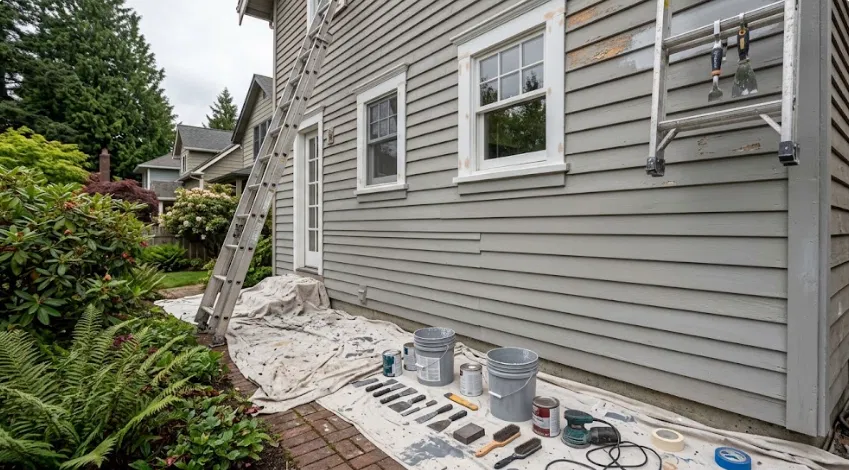
- Timing after washing. Wood needs to dry before it gets painted. Forest Products Lab research found that leaving bare siding exposed to weather even a week or two before painting shortens the coating’s service life. Painting damp cedar in October is how you buy a three-year paint job.
- The substrate. Cedar, fir, hardboard, fiber cement, and stucco all behave differently. Cedar bleeds tannins and needs a stain-blocking primer. Hardboard swells at the edges. Fiber cement is the easiest surface we paint.
- Exposure. Which way the wall faces, how close the trees are, whether the gutters overflow. More on that below.
- Coats and film build. Two full coats, not one and a half. A peer-reviewed review of outdoor wood finishing found service life climbs measurably with better sanding, a proper primer, and more finish coats. That matches what we see.
What fails first on Seattle-area homes
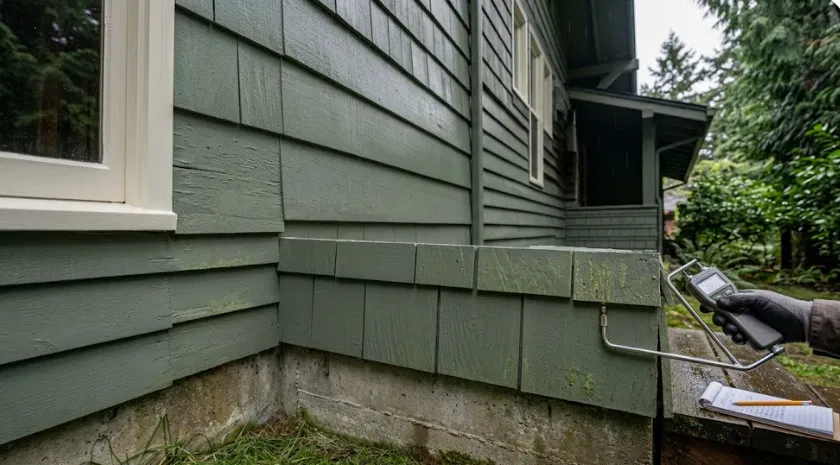
North-facing walls go first, and it’s rarely the paint’s fault. They stay damp, they don’t get sun to dry them, and moss and mildew colonize the surface.
The film is usually still sound underneath the green, and the same mildew rules from our guide to cleaning painted walls apply outside.
South and west walls fade. Deep reds and dark blues go chalky on that side years before the north wall shows anything, which is why one elevation can look tired while the rest of the house looks fine.
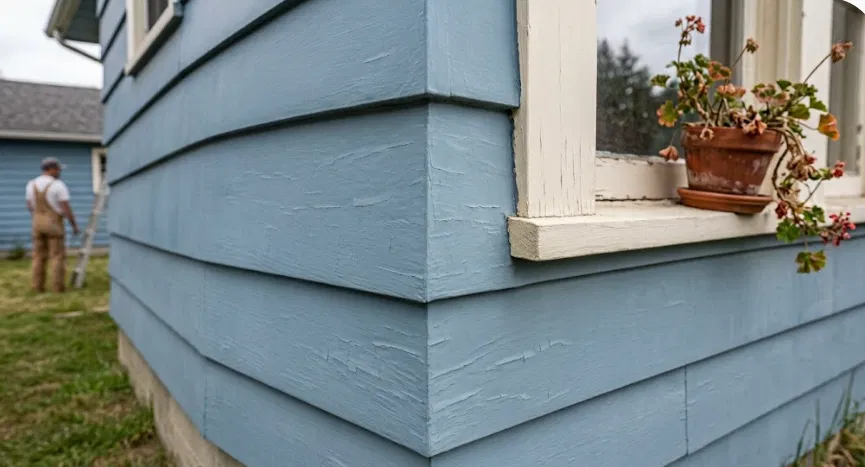
Horizontal surfaces are the real killers. Window sills, deck railings, the top edge of trim boards. Water sits there instead of running off, works into a caulk joint or an end grain, and pushes the paint off from behind. Every peeling job I’ve been called to fix started either at a horizontal surface or at a gutter that overflows. It’s the first thing our exterior painting crew walks for on an estimate.
The most durable exterior paint we use
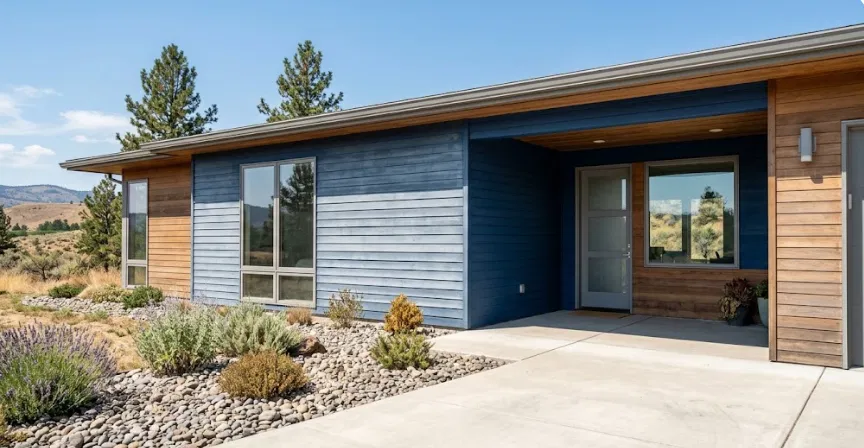
Sherwin-Williams Emerald Exterior and Benjamin Moore Aura Exterior are the two we reach for, with SW Duration as the step down when budget matters. What you’re paying for in a premium line is resin quality: better adhesion, better flexibility as wood moves through wet and dry cycles, and better fade resistance in the pigment. Behr Marquee is a real product and fine on a rental. Where cheap paint costs you is film thickness and flexibility, and both show up in year four, not year one.
One honest caveat: the best paint on bad prep still fails. The reverse, a mid-grade paint on excellent prep, usually outlasts it. Horizontal wood is the exception to every rule here, which is why deck staining runs on its own much shorter cycle.
How to make yours last longer
- Wash the house once a year, especially the shaded sides
- Keep gutters clear and downspouts aimed away from siding
- Cut back shrubs and branches so walls get airflow
- Recaulk failing joints as you spot them, not in five years
- Touch up chips and exposed wood the season they appear
- Fix wood rot early, because soft wood ruins good paint
- Restain decks on their own two to four year cycle
Why we warranty seven years
Our 7-year workmanship warranty covers peeling, cracking, and adhesion failure, plus free lifetime touch-ups. We can offer that because the prep is non-negotiable on our jobs, and because adhesion failure is a prep problem. When a painter won’t warranty past two years, that tells you something about what happens before the sprayer comes out. We cover Seattle, Bellevue, Kirkland, Redmond, Bothell, and the rest of the Eastside. Call or text (425) 217-3720 for a free estimate.
Frequently asked questions
How long should I expect an exterior repaint to last in the Pacific Northwest?
Seven to ten years if the prep was done right and quality paint went on. Three to five if it wasn’t. Shaded north walls and horizontal trim will always come due before the rest of the house.
What makes exterior paint last longer?
Prep, mostly. Clean, dry, sound, primed wood is what a coating needs to bond to, and everything else is a distant second. After that: two full coats of a premium product, caulked joints, and no painting over damp siding.
What are the best exterior paint brands for extreme weather durability?
Sherwin-Williams and Benjamin Moore, specifically Emerald Exterior and Aura Exterior. Both are built to flex as wood expands and contracts, which is what our wet-dry cycling demands. For sun-heavy climates the fade resistance matters more; here it’s the moisture performance you’re buying.
How do I choose exterior paint that resists fading and peeling over time?
Two different problems, two different answers. For fading, pick a premium acrylic and go easier on saturated reds, deep blues, and near-blacks on the south and west sides. For peeling, the paint barely matters, since peeling is adhesion, and adhesion is prep and moisture.
What are your tips for maximizing exterior paint lifespan?
- Wash shaded walls yearly before moss takes hold
- Keep gutters clean and downspouts pointed away
- Trim vegetation back off the siding
- Recaulk joints as soon as they open
- Touch up chips and bare wood the same season
- Repair soft or rotted wood instead of painting over it
Why is my exterior paint peeling?
Nine times out of ten it’s moisture plus prep. Water got behind the film through a failed caulk joint, an overflowing gutter, or wood that was still wet when it was painted, and the paint let go from the back. Look at where it’s peeling; that usually names the cause.
How many coats of exterior paint do I need?
Two, over primed and prepped surfaces. One coat looks fine in month one and thins out at the edges and high spots, which is exactly where failure starts. Bare wood gets primer plus two.
Does cedar siding need anything special?
Yes. Cedar bleeds tannins that will ghost through a finish coat, so bare cedar gets a stain-blocking primer first. It also needs to be genuinely dry before painting, which in our climate can mean waiting several dry days after a wash.
When is the best time of year to paint a house in Seattle?
Roughly June through September, when you can count on dry stretches and overnight temperatures stay above the paint’s minimum. May and October are workable with a good forecast. We don’t spray exteriors in November.
Is premium exterior paint worth the extra cost?
On a house you’re keeping, yes. The material difference on an average exterior is a few hundred dollars, and the labor is the same either way, so you’re buying two or three extra years for a small fraction of the job cost